

Ardmore, PA – August 31, 2026 – PRESSADVANTAGE –
Evolve Collision Centers has published new consumer guidance explaining warning signs and vehicle behaviors that drivers may encounter when advanced driver-assistance systems are affected following a collision. The August resource also explains why visible warnings are only one part of determining whether scanning, diagnostic procedures, or calibration may be applicable to a particular vehicle.
The publication was developed to give vehicle owners additional context as cameras, radar units, parking sensors, and other electronic components become increasingly integrated into bumpers, windshields, mirrors, lamps, and surrounding vehicle areas.
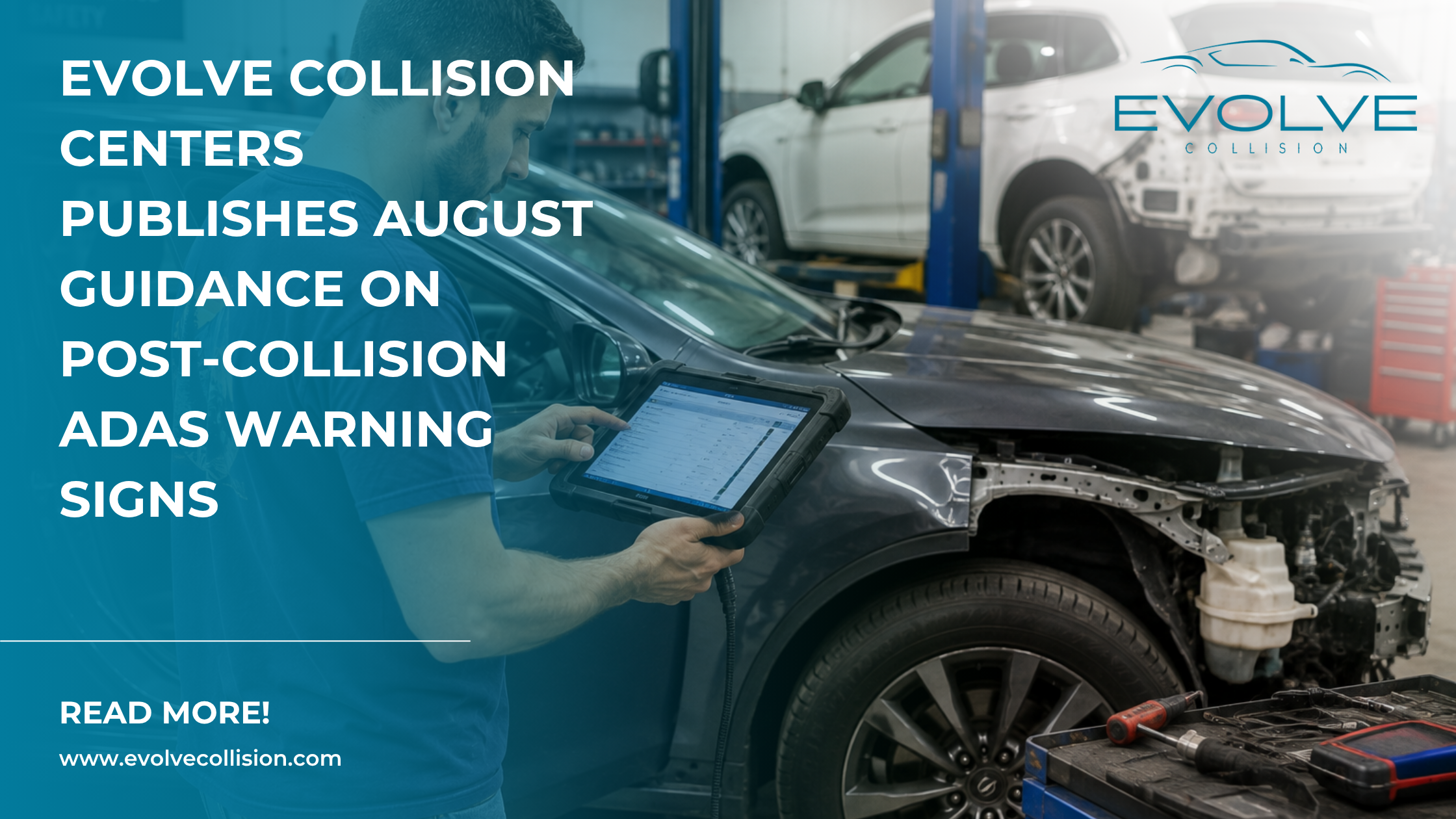
Following an accident, drivers may notice an illuminated warning indicator, dashboard message, unavailable-system notification, or a change in the operation of a driver-assistance feature. Depending on the vehicle, these observations can involve systems associated with functions such as forward collision alerts, lane-related assistance, parking assistance, or other equipped features.
Evolve Collision Centers’ August guidance emphasizes that a warning message should be documented rather than used by itself to determine what repair procedure is required. Vehicle configuration, the affected area, diagnostic information, repair operations, and manufacturer procedures can all contribute to determining the appropriate next steps.
The absence of a dashboard warning also does not independently establish that every ADAS-related component is unaffected.
Some driver-assistance equipment is positioned behind exterior components or incorporated into areas that can be involved in collision damage. A radar unit, camera, sensor, bracket, wiring connection, or mounting location may not be readily visible during an exterior inspection.
The August publication therefore encourages consumers to view ADAS considerations as part of the broader collision repair planning process rather than relying exclusively on what appears on the instrument panel.
Evolve Collision Centers provides additional information about these systems through its scanning and calibration resource.
One area covered by the new guidance is dashboard and system notifications after a collision.
Modern vehicles can display messages indicating that a driver-assistance feature is unavailable, limited, disabled, or requires attention. The wording and meaning of these notifications vary by manufacturer, model, and system.
A message appearing after an accident can provide useful information for repair planning, but it does not necessarily identify the underlying condition or establish which procedure is required. Diagnostic information and applicable manufacturer procedures may be needed to interpret the condition in the context of the individual vehicle.
The guidance also discusses changes in system availability or operation.
A driver may notice that a feature used before the collision is temporarily unavailable or appears to operate differently. Because ADAS configurations vary considerably among vehicles, Evolve Collision Centers does not present a universal list of behaviors that proves a particular component has been damaged.
Instead, the publication recommends documenting what the driver observes and providing that information during the collision repair process.
Another consideration is the location of the impact.
Depending on the vehicle, ADAS-related components can be positioned in areas commonly involved in collisions. Forward-facing radar equipment may be located behind or near portions of a front bumper or grille, while cameras can be associated with windshields, mirrors, or other locations. Parking sensors can also be incorporated into bumper assemblies.
An impact in one of these areas does not automatically mean that an ADAS component was damaged or that calibration is required. It does, however, provide information that can be considered alongside the vehicle’s equipment and applicable repair procedures.
Component mounting can be relevant as well. Electronic equipment can depend on brackets, mounting points, surrounding panels, or other components for its installed position. Evaluation may therefore involve more than checking whether the electronic unit itself has visible damage.
This is one reason post-collision ADAS considerations can intersect with conventional body repair.
A damaged bumper cover, lamp, mirror, windshield, or nearby component may require repair, replacement, removal, or reinstallation. Depending on the vehicle, those operations can be associated with manufacturer procedures addressing electronic systems located in or around the repair area.
Additional information about the overall repair-planning process is available through Evolve Collision Centers’ collision repair resource.
The August guidance also explains the distinction between scanning and calibration.
Vehicle scanning can provide diagnostic information from electronic control systems. Depending on the vehicle and circumstances, diagnostic trouble codes or other system information may contribute to repair planning and post-repair evaluation.
Calibration is a separate procedure used for certain vehicle systems when applicable requirements specify that a camera, radar unit, sensor, or related system needs to be calibrated following particular repairs, replacements, adjustments, or other operations.
The two terms are therefore not interchangeable, and neither procedure should be assumed necessary solely because a vehicle has been involved in a collision.
Whether scanning, calibration, or another technical procedure applies depends on factors that can include the vehicle, system configuration, collision-affected area, components repaired or replaced, and manufacturer requirements.
The publication specifically cautions against using the presence or absence of a warning light as the sole test for calibration requirements.
A vehicle may display a warning for reasons that require further diagnosis, while a manufacturer procedure may call for calibration after a particular repair operation even when a driver has not observed a warning message. Requirements must therefore be determined from information applicable to the individual vehicle and repair.
The guide also addresses windshield and glass-related considerations.
Some vehicles incorporate forward-facing cameras or other equipment near the windshield. When collision damage involves the glass or when windshield replacement becomes part of a repair, vehicle-specific procedures can become relevant to equipment mounted in that area.
Evolve Collision Centers provides more information about glass-related repair work through its glass work resource.
Post-repair observations are another subject covered in the August publication.
After collision repairs, drivers should be familiar with the warning indicators and messages displayed by their vehicle and report unexpected notifications or changes in system availability. The meaning of a particular warning and the procedures needed to address it remain specific to the vehicle and system involved.
The resource does not suggest that driver-assistance technology replaces driver attention or that completing a particular procedure guarantees the operation of a vehicle feature. Its purpose is to explain how ADAS-related information can become part of collision repair planning and verification.
For consumers, understanding this distinction can make terms such as diagnostic scanning, calibration, sensor replacement, camera calibration, and manufacturer procedure easier to discuss during a repair.
The August guidance also reinforces that ADAS evaluation should not be separated entirely from the physical repair of the vehicle. Modern collision repair can involve both exterior components and electronic equipment located within or near the affected area.
Documenting the impact location, identifying the vehicle’s installed equipment, reviewing applicable procedures, and recording relevant warning messages can provide information used to develop the repair plan.
Evolve Collision Centers is publishing the guidance as consumer education rather than as a diagnostic checklist. A warning light, system message, impact location, or change noticed by the driver cannot independently determine the technical procedures required for a particular vehicle.
Instead, applicable procedures are based on the individual vehicle, documented conditions, repair operations, diagnostic information when relevant, and manufacturer requirements.
The August publication expands Evolve Collision Centers’ consumer information by focusing specifically on what drivers may notice after an accident and how those observations can relate to the technical side of contemporary collision repair.
For drivers in Ardmore and surrounding Main Line communities, Evolve Collision Centers provides collision repair, scanning, calibration, and related vehicle repair services from its facility at 2560 Haverford Rd, Ardmore, PA 19003.
About Evolve Collision Centers
Evolve Collision Centers provides collision and related automotive repair services, including auto body repair, paintless dent repair, refinishing, auto glass work, vehicle scanning and calibration, and OEM-certified repair capabilities. The company serves vehicle owners in Ardmore and surrounding Main Line communities.
###
For more information about Evolve Collision Centers, contact the company here:
Evolve Collision Centers
Butch Cantz
(267) 692-6699
bcantz@evolvecollision.com
2560 Haverford Rd, Ardmore, PA 19003
