
ZKTOR and the Quiet Power of Refusal

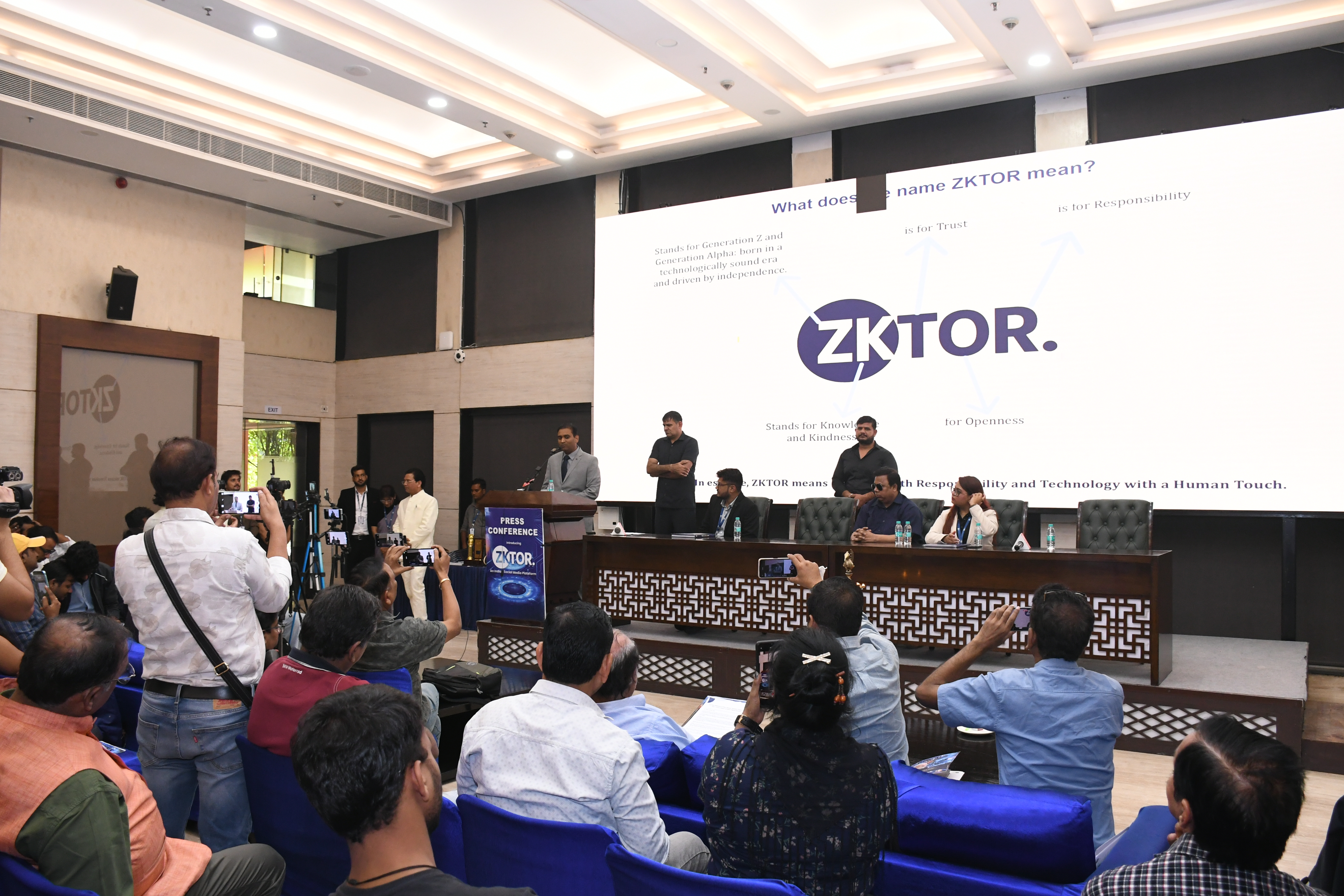
Helsinki, Uusimaa Jan 4, 2026 (Issuewire.com) For more than twenty years, the global internet has advanced under a single, largely unquestioned assumption: that scale requires surveillance. That growth demands data extraction. That personalization is inseparable from behavioral profiling. These ideas were not debated into consensus; they settled quietly, reinforced by venture capital incentives, platform economics, and the promise of frictionless convenience. Over time, they hardened into doctrine. Today, that doctrine is beginning to fracture.
Not because a government banned it. Not because regulation finally caught up. But because a platform has emerged that was built around a deliberate refusal to accept those premises at all. ZKTOR does not present itself as a rebellion. It presents itself as evidence. Evidence that much of what the internet came to accept as inevitable was, in fact, a choice. At the center of that choice is a decision rarely made in contemporary technology. To say no.
The Decision That Shaped the System Before the System Existed
ZKTOR did not begin as a product roadmap. It began as a constraint. Its founder, Sunil Kumar Singh, reached a conclusion that most technology founders are encouraged to avoid. If external capital defines your timelines, it will eventually define your architecture. If external power defines your access, it will eventually define your boundaries.
Singh declined Western venture capital not out of ideological hostility, but out of structural clarity. Venture funding does not merely accelerate growth. It compresses time. It reframes questions. Privacy becomes a risk factor. Restraint becomes inefficiency. Design decisions begin to answer to exit horizons rather than social consequence.
Equally significant was the refusal of state patronage. Government support often arrives with implicit expectations. Today it is facilitation. Tomorrow it is access. When a platforms core concern is data, dignity, and sovereignty, even benign influence can distort outcomes. ZKTORs independence was not a branding exercise. It was an architectural requirement.
Why Intent Is Not Enough
The modern internet is full of platforms that claim ethical intent. Far fewer are structurally incapable of unethical behavior. This distinction defines ZKTOR. The platform is built on privacy by design, not privacy by promise. Its zero knowledge architecture ensures that private user content is not merely protected by policy but inaccessible by structure. Encryption keys remain on user devices. Engineers, administrators, and internal teams cannot view private media or communications. Trust here is not requested. It is enforced by limitation. This approach reverses a long-standing power dynamic. Instead of users trusting platforms with intimate data, platforms are designed so they cannot possess it in the first place.
Knowing Less as a Form of Responsibility
ZKTORs most radical decision is its refusal to know more than necessary. In an industry obsessed with insight, prediction, and behavioral mapping, intentional ignorance is countercultural. The system facilitates interaction without constructing persistent psychological profiles. It does not track users across contexts. It does not aggregate behavioral histories to infer vulnerability, preference, or susceptibility. This is not technological minimalism. It is ethical containment. When systems know less, they can do less harm.
No-URL Media and the Architecture of Dignity
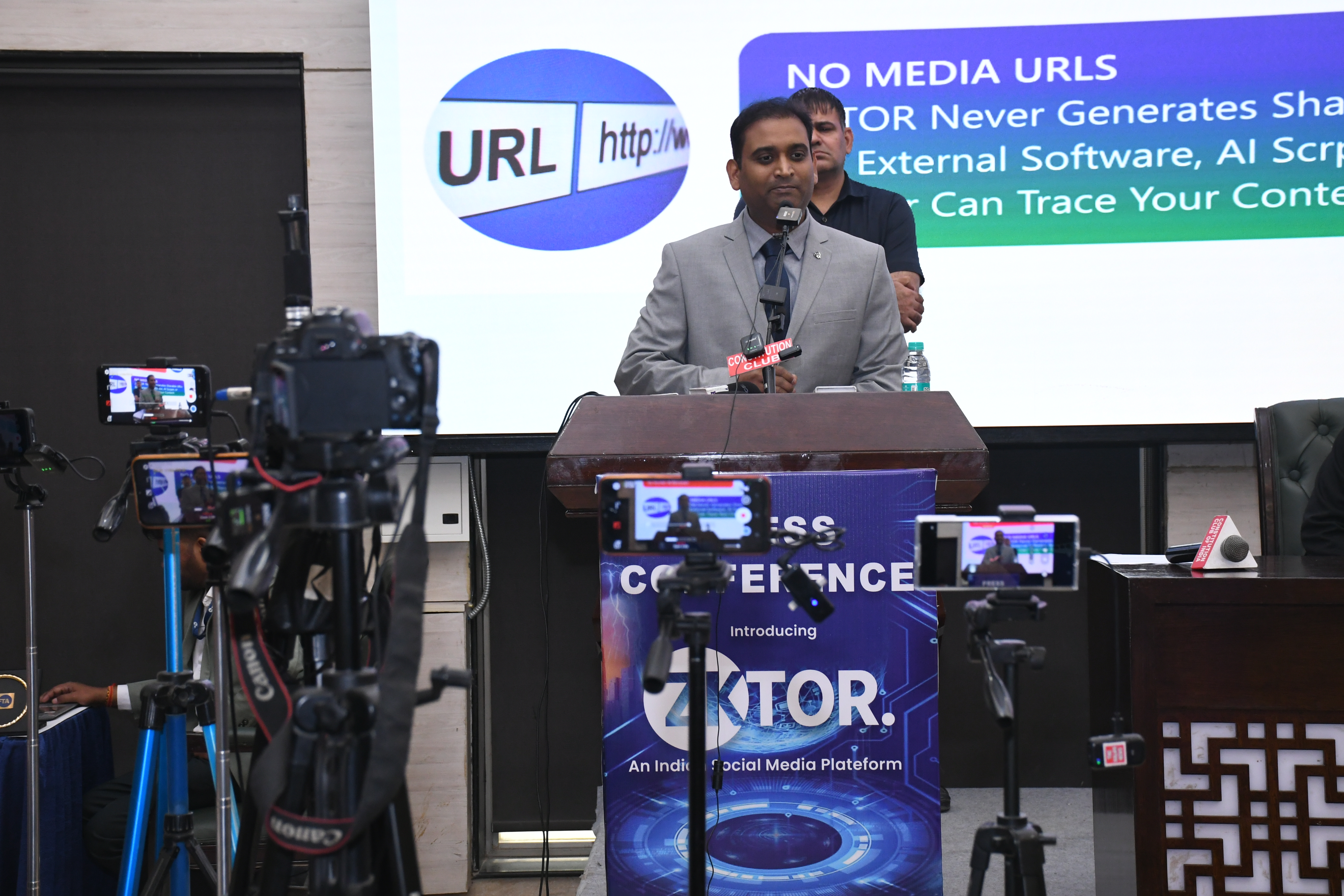
Perhaps the clearest expression of this philosophy lies in ZKTORs media design. Images and videos shared on the platform cannot be downloaded or distributed via persistent URLs. Content remains bound to its original context.
This decision directly addresses one of the internets most destructive failures: the irreversible spread of non-consensual imagery. In many regions, particularly across South Asia, the consequences of such exposure extend far beyond reputational damage. They affect safety, livelihood, and mental health. For women and young users especially, digital harm is rarely abstract. Most platforms respond after damage occurs. ZKTOR intervenes before scale becomes possible. Containment, not reaction, becomes the primary defense.
Artificial Intelligence Without Behavioral Exploitation
Where mainstream platforms deploy artificial intelligence to maximize engagement, ZKTOR uses it sparingly and deliberately. AI functions are limited to harm reduction. Detecting impersonation. Identifying non-consensual content. Flagging abusive patterns.
There are no algorithmic nudges engineered to amplify outrage. No addiction loops optimized for attention capture. The absence is intentional. This restraint reflects a deeper belief: not every technically feasible optimization is socially legitimate. Intelligence can protect without persuading. It can assist without manipulating.
Data Sovereignty as Engineering Reality
ZKTORs infrastructure enforces data sovereignty by architecture. User data is stored and processed within the geographic region of origin. This includes backups and disaster recovery systems. Unlike conventional compliance strategies, this approach does not rely on contractual assurances. It removes the possibility of silent cross-border data flows. Jurisdictional overreach becomes technically constrained rather than legally contested. In a world where data localization is often symbolic, ZKTOR treats it as an engineering baseline.
A Viable Economy Without Surveillance
Perhaps the most persistent myth in digital economics is that surveillance is the only sustainable revenue model. ZKTOR directly challenges this assumption. The platform operates its own contextual advertising system, targeting by geography rather than identity. Ads are delivered at the level of postal codes, districts, or regions, without behavioral profiling or cross-platform tracking.
Additional revenue flows come from subscriptions, creator tools, and enterprise communities. The exchange of value is explicit. Users are customers, not inventory. This transparency eliminates a fundamental conflict of interest. When revenue does not depend on observation, design priorities shift naturally toward utility and trust.
Nordic Restraint Meets South Asian Reality
Singhs years in Finland shaped his appreciation for Nordic engineering principles. Systems are expected to be quiet, stable, and resilient rather than spectacular. Complexity is minimized. Longevity is prioritized.
At the same time, his grounding in South Asia exposed him to the realities of uneven digital literacy and heightened vulnerability. In such environments, architectural safeguards are not optional enhancements. They are necessities. ZKTOR is the synthesis of these worlds. Technologically advanced yet deliberately limited. Globally informed yet locally sensitive.
Why This Platform Matters Beyond Itself
ZKTOR does not claim to be the future of the internet. Its significance lies elsewhere. It proves that many practices defended as unavoidable were, in fact, decisions aligned with convenience and profit. By rejecting capital and control early, the platform preserved the freedom to choose differently. That freedom is rare in technology. And it is instructive.
A Question the Industry Can No Longer Avoid
If a social platform can function without surveillance, without behavioral extraction, and without external pressure, then the burden of explanation shifts. The question is no longer whether alternatives are possible. It is why they were resisted for so long. ZKTOR does not demand an answer. It simply stands as evidence.
In an era defined by loud launches and inflated promises, its credibilty is built quietly, through constraint rather than scale. Through architecture rather than assertion. That quiet credibility may prove to be its most disruptive feature of all.
Media Contact
Softa Technologies Limited (STL )
Source :Softa Technologies Limited
This article was originally published by IssueWire. Read the original article here.
Information contained on this page is provided by an independent third-party content provider. XPRMedia and this Site make no warranties or representations in connection therewith. If you are affiliated with this page and would like it removed please contact [email protected]
